
Robocall activity remained stubbornly high in April, with Americans receiving an estimated 4.2 billion robocalls nationwide. While overall call volume was relatively stable month over month, the story beneath the surface is more interesting.
Some states continue to receive massive robocall volumes every month, while others are seeing faster growth as scammers, telemarketers, and fraudsters shift their targeting strategies.
According to the latest data from the YouMail Robocall Index, Americans received approximately 140.2 million robocalls per day, 5.8 million per hour, and roughly 1,600 robocalls every second during April. The average person received 12.8 robocalls during the month.
Download YouMail and instantly stop spam calls, texts, and voicemail.
What changed from March to April?
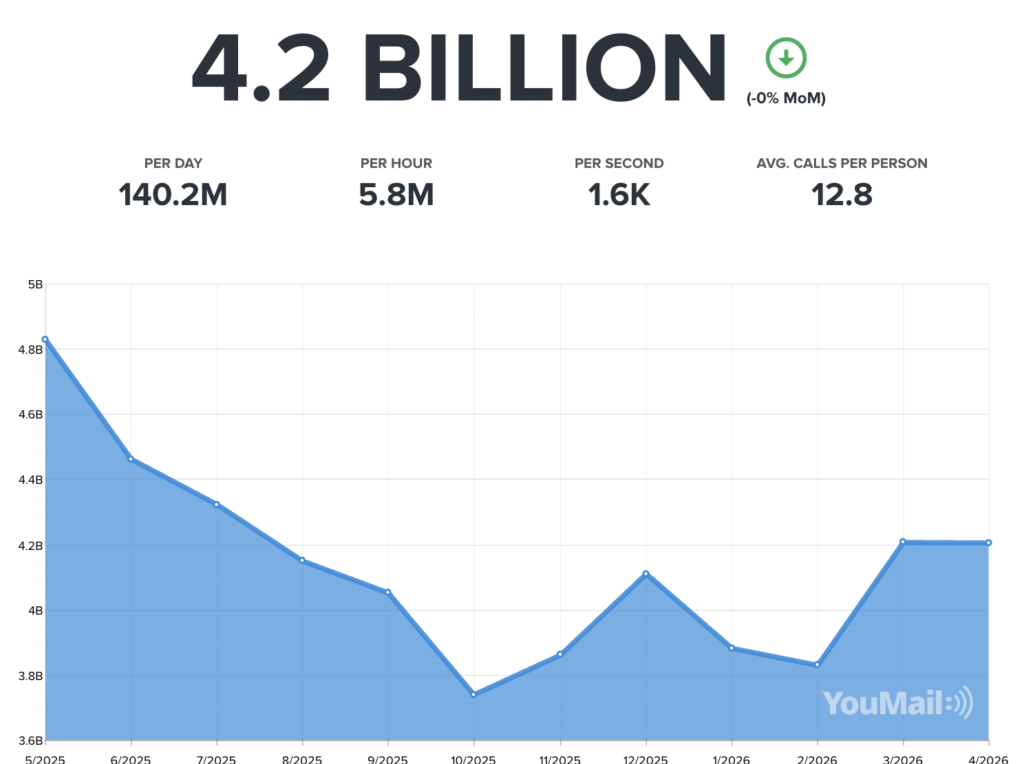
After March’s increase to 4.2 billion robocalls, April remained at roughly the same level, indicating that robocall activity continues to be a persistent problem rather than a temporary spike.
While overall volume was relatively unchanged, certain geographic areas experienced notable increases in activity. Looking at city-level data helps reveal where robocallers are concentrating their efforts and which states are seeing the highest overall exposure.
One important takeaway is that scammers rarely target locations randomly. Population size plays a role, but so do demographics, business activity, consumer behavior, and the success of previous campaigns.
The top 5 hardest-hit states
Based on the concentration of cities appearing throughout the Robocall Index rankings, several states continue to dominate nationwide robocall activity.
Georgia
Georgia remains one of the most heavily targeted states in the country. Atlanta once again led the nation with nearly 140 million robocalls during April, while Augusta, Savannah, Albany, and Macon also appeared among the top-ranked cities.
The state’s large metropolitan areas, growing population, and strong business presence make it an attractive target for both telemarketing and scam campaigns.
Texas
Texas continues to be a robocall hotspot. Dallas and Houston both ranked among the nation’s most targeted cities, while San Antonio, Austin, Tyler, Beaumont, and Killeen also appeared on the list.
The combination of major urban centers and a large statewide population creates significant opportunities for robocall campaigns seeking maximum reach.
Florida
Florida remains a favorite target for robocallers. Orlando, Miami, Tampa, Fort Lauderdale, Jacksonville, Gainesville, Daytona Beach, Pensacola, and West Palm Beach all appeared among the most affected cities nationwide.
Florida’s large retiree population often attracts fraud campaigns involving Medicare, financial services, government impersonation scams, and insurance-related solicitations.
California
California continues to see high robocall volumes across multiple regions. Los Angeles, San Diego, Riverside, Sacramento, Fresno, Bakersfield, Long Beach, and the San Francisco Bay Area all ranked among the country’s most affected areas.
Because California contains several of the nation’s largest population centers, it remains a consistent target for large-scale robocall operations.
North Carolina
North Carolina quietly continues to rank among the most targeted states. Charlotte, Raleigh, Greensboro, Fayetteville, Asheville, and Greenville all appeared in the latest rankings.
This broad geographic distribution suggests robocall activity is affecting both large metropolitan areas and smaller regional markets.
The biggest risers
While the largest states often receive the most robocalls, some smaller markets are experiencing rapid increases in activity.
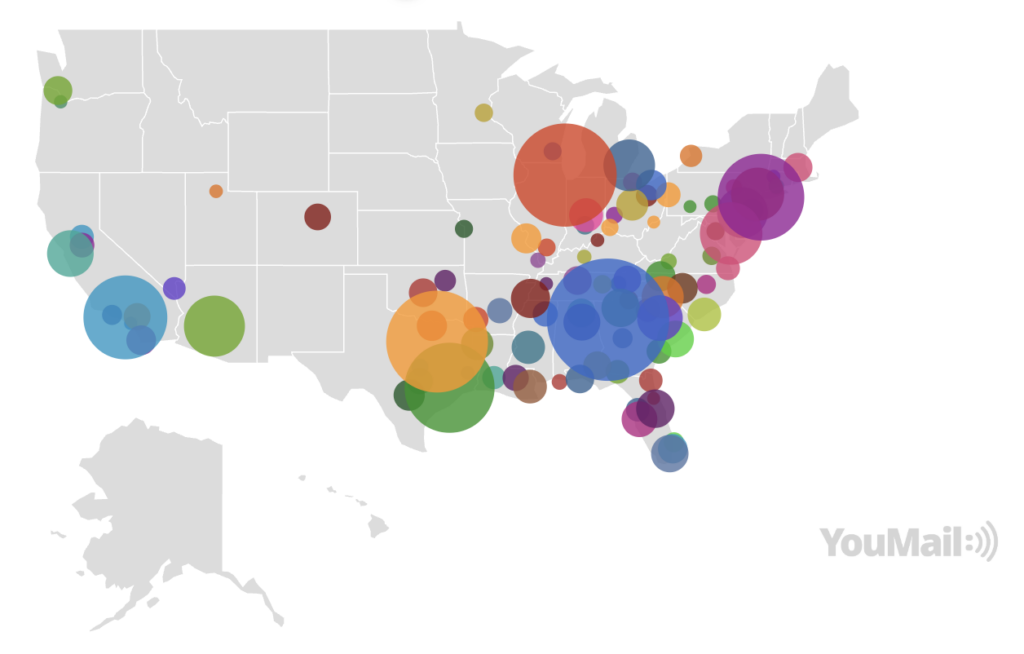
Several cities that appeared prominently in April’s rankings included:
- Columbia, South Carolina
- Baltimore, Maryland
- Houston, Texas
- Memphis, Tennessee
- Charleston, South Carolina
- Birmingham, Alabama
Each experienced double-digit percentage increases compared to previous periods, suggesting heightened campaign activity in those regions.
These increases may reflect shifting scam strategies, new telemarketing campaigns, or increased targeting of specific demographic groups.
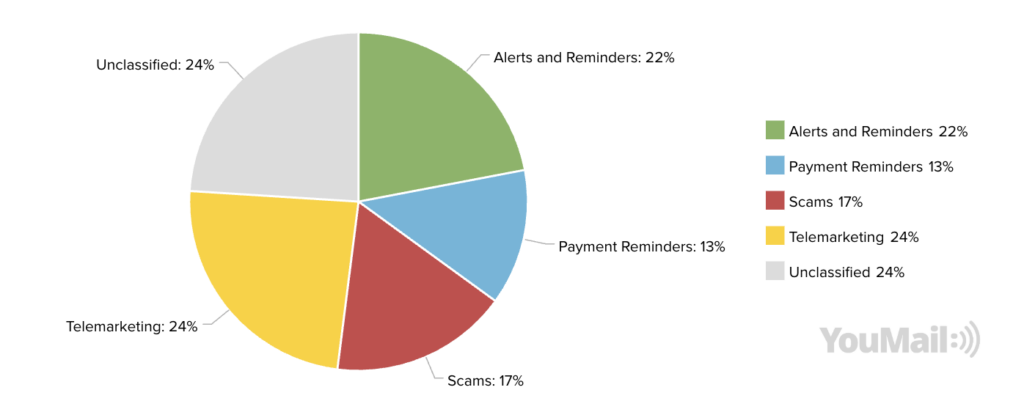
What types of robocalls are driving the volume?
Not all robocalls are scams. According to the April data:
- Telemarketing calls accounted for 32%
- Alerts and reminders represented 24%
- Scams represented 22%
- Payment reminders represented 15%
- Unclassified calls accounted for 7%
However, scam calls remain one of the most concerning categories because they often involve financial fraud, identity theft, and impersonation schemes.
Fraud and financial scams
Many scam campaigns impersonate:
- Banks
- Credit card companies
- Government agencies
- Payment platforms
These calls typically attempt to create urgency by claiming suspicious activity, account issues, or security threats.
Impersonation scams
Scammers increasingly spoof legitimate organizations to gain trust. Common examples include:
- IRS impersonation
- Social Security scams
- Utility company scams
- Law enforcement impersonation
These campaigns often rely on fear and pressure to convince victims to act quickly.
AI-enhanced scam operations
Many modern robocall campaigns now combine traditional spoofing tactics with AI-generated scripts, automated voice systems, and sophisticated targeting methods.
This allows fraudsters to launch large-scale campaigns while appearing increasingly legitimate.
Why robocallers target certain states
Robocall campaigns are built around efficiency. Criminal organizations and aggressive telemarketers focus on areas where they believe response rates will be highest.
Factors that influence targeting include:
- Population density
- Consumer demographics
- Business activity
- Historical campaign performance
- Regional economic trends
As a result, states with large populations and active consumer markets frequently remain at the top of the rankings.
How to protect yourself
Even if you live in one of the hardest-hit states, there are steps you can take to reduce your risk.
Avoid engaging with suspicious callers
If you do not recognize the caller, avoid sharing personal information until you independently verify their identity.
Never trust caller ID alone
Caller ID spoofing remains one of the most common robocall tactics. A familiar number does not guarantee a legitimate caller.
Use automated spam protection
Modern robocall campaigns rotate numbers constantly, making manual blocking ineffective.
YouMail helps identify scam patterns, block robocalls automatically, and reduce unwanted interruptions before they reach you.
Final thoughts
April’s robocall data shows that unwanted calls remain a nationwide problem, with several states continuing to bear the brunt of robocall activity.
Georgia, Texas, Florida, California, and North Carolina remain among the most heavily targeted regions, while cities like Columbia, Baltimore, Memphis, and Charleston are seeing notable increases in activity.
Although telemarketing still accounts for the largest share of robocalls, scam calls continue to represent a significant threat due to their focus on fraud, impersonation, and financial theft.
Want to stay ahead of robocall trends and stop spam calls before they reach your phone? Download YouMail or explore the latest data in the Robocall Index to see how your area compares.