

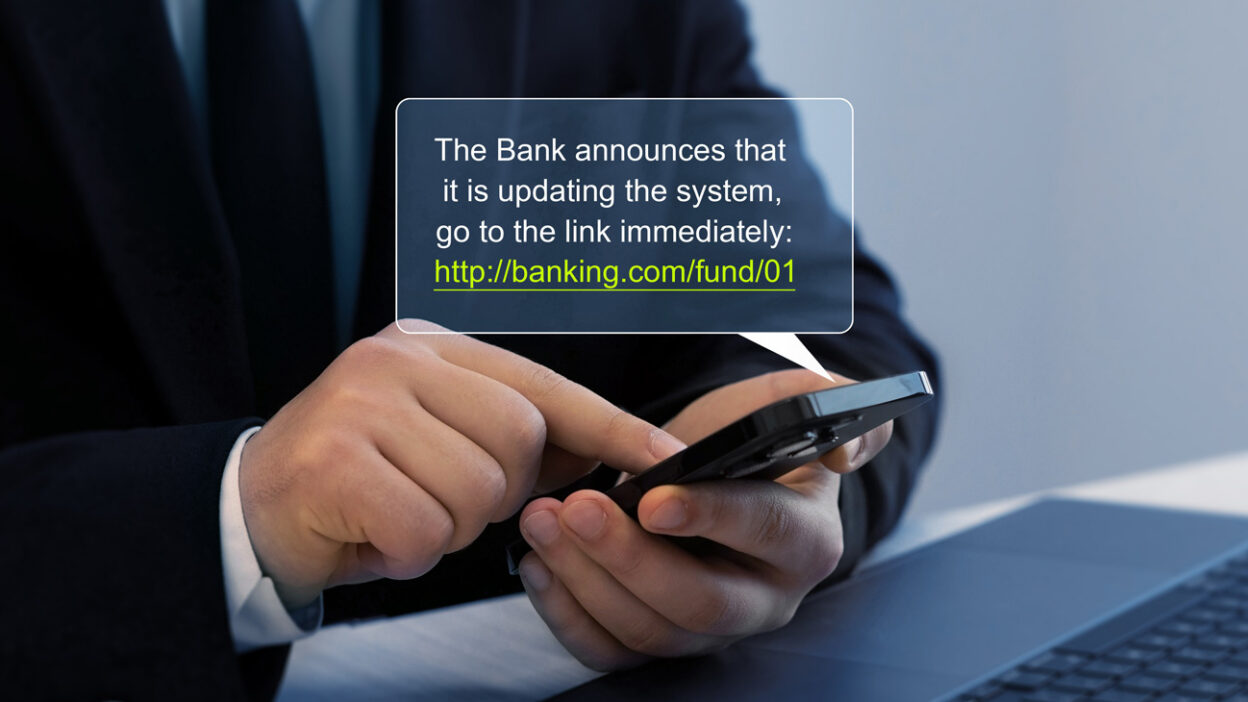
Scammers frequently pretend to be organizations people trust. One increasingly common tactic is the bank impersonation scam, where criminals pose as representatives from your bank to trick you into sharing personal information or sending money.
According to data referenced by the Federal Trade Commission, consumers reported losing $12.5 billion to fraud in 2024, with impersonation scams among the most commonly reported types.
Understanding how these scams work can help you recognize warning signs and protect your accounts.
Download YouMail and instantly stop spam calls, texts, and voicemail.
How Bank Impersonation Scams Work
In a bank impersonation scam, criminals contact victims pretending to represent a financial institution. These scams can arrive through:
- Text messages
- Phone calls
- Emails
- Fake banking websites
- US Mail
Often the message appears urgent. For example, a scammer may claim that suspicious activity has occurred on your account and ask you to verify information immediately.
A typical scenario might look like this:
- You receive a text message asking you to confirm a purchase you didn’t make.
- If you respond, you may receive a phone call from someone claiming to be from the bank’s fraud department.
- The caller asks for sensitive information such as account passwords, Social Security numbers, or one-time verification codes.
- The scammer uses that information to access your account or steal money.
According to FTC reporting cited by the FDIC, the typical consumer loss from these scams is around $3,000, and victims may also face identity theft risks.
Warning Signs of a Bank Impersonation Scam
Many impersonation scams rely on urgency and fear to get victims to act quickly.
Be cautious if a message or caller:
- Claims there is suspicious activity on your account and demands immediate action
- Asks you to share passwords, one-time codes, or full account numbers
- Directs you to click a link or call a number you don’t recognize
- Pressures you to stay on the phone while taking action
Legitimate banks rarely ask for sensitive information over the phone and will not pressure you to act immediately without verification.
What To Do If You Receive a Suspicious Message or Call
If someone contacts you claiming to be from your bank and something doesn’t feel right:
Take these steps:
- Hang up or stop responding to the message
- Contact your bank directly using the phone number on the back of your debit or credit card
- Do not click links in suspicious messages
- Never share one-time passcodes or passwords with callers
Taking a moment to verify the situation can prevent scammers from gaining access to your account.
Watch Out for Fake Bank Websites
Another tactic scammers use is creating fake bank websites designed to steal personal information.
Some fraudulent websites even display the “Member FDIC” logo to appear legitimate.
To verify whether a bank is actually FDIC-insured, the FDIC recommends using its BankFind Suite, which allows you to search for legitimate institutions by name or location.
When evaluating a banking website:
- Check for misspellings in the website address
- Confirm the web domain matches the official bank name
- Avoid entering personal information unless you are certain the site is legitimate
If you suspect a website is pretending to be an FDIC-insured bank, you can contact the FDIC National Center for Consumer and Depositor Assistance for help verifying it.
Additional Consumer Resources
For more detailed guidance on bank impersonation scams, including examples and verification tools, review the FDIC’s official consumer education article:
FDIC Resource:
https://www.fdic.gov/consumer-resource-center/2025-06/bank-impersonation-scams-and-fake-banks
You can also explore related resources from:
- Federal Trade Commission (FTC) — Imposter Scam Guidance
- American Bankers Association — “Banks Never Ask That” campaign
How YouMail Helps Protect Against Scam Calls
While education is important, technology can help reduce the number of scam calls you receive in the first place.
YouMail automatically identifies and blocks many known scam and robocalls before they reach your phone. Combined with awareness of how impersonation scams work, these tools can provide an additional layer of protection.
Important Attribution
This article includes information summarized from the Federal Deposit Insurance Corporation (FDIC) Consumer Resource Center publication titled “Bank Impersonation Scams and Fake Banks.”
The FDIC is an independent agency of the United States government that maintains stability and public confidence in the nation’s financial system.
You can view the original publication here:
https://www.fdic.gov/consumer-resource-center/2025-06/bank-impersonation-scams-and-fake-banks
This blog post is intended for informational purposes and does not replace official guidance from the FDIC or other regulatory agencies.

Started using umail years ago and I can spot scammers fast