

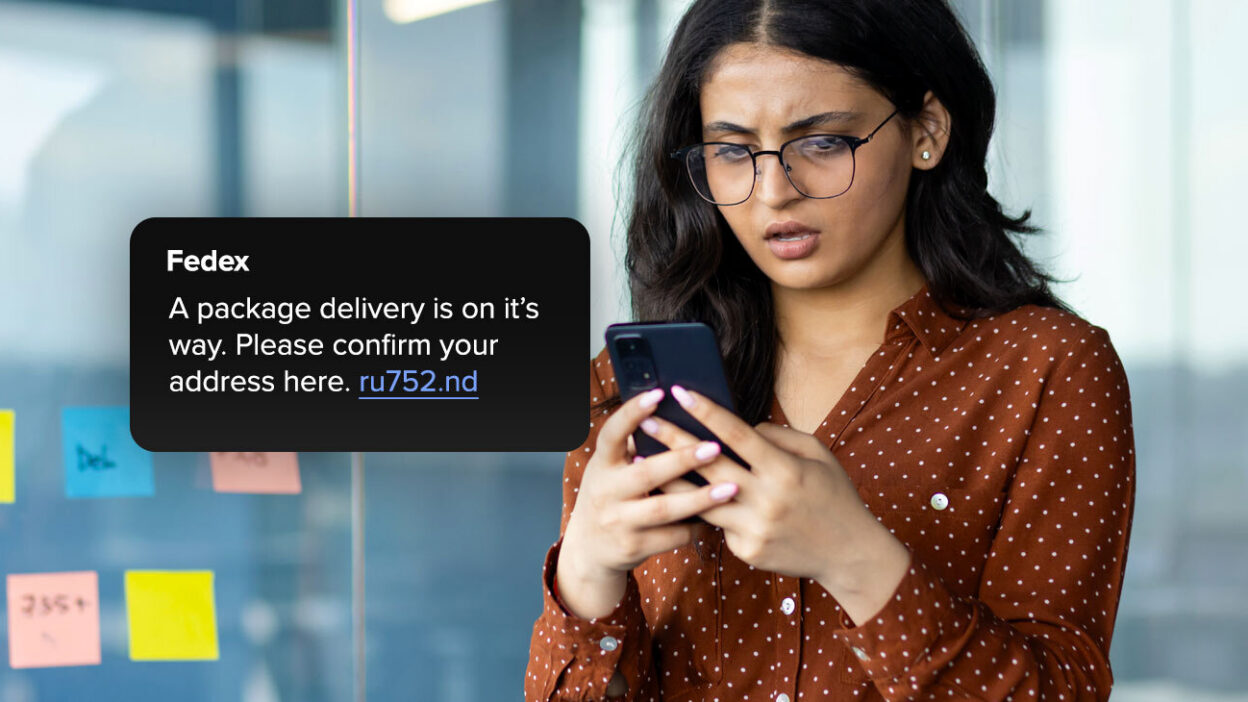
Waiting for a package has become part of everyday life. Whether it’s a household essential, a birthday gift, or your latest online purchase, most of us are expecting a delivery at any given time.
Scammers know that.
That’s why package delivery scams have become one of the most common types of fraud. From fake shipping notifications to unexpected packages showing up at your door, scammers are finding new ways to take advantage of people’s trust and curiosity.
At YouMail, we believe staying protected starts with knowing what to look for. Here’s how these scams work and what you can do if they happen to you.
Download YouMail and instantly stop spam calls, texts, and voicemail.
How package delivery scams work
Many delivery scams begin with a text message or email claiming there’s a problem with a shipment.
The message may say:
- “Your package couldn’t be delivered”
- “Additional payment is required”
- “Your address needs to be verified”
- “A delivery is waiting for confirmation”
These messages often include a link and create a sense of urgency, hoping you’ll click before thinking twice.
If you do click, you may be directed to a fake website designed to steal personal information, payment details, or account credentials. In some cases, the link may even install malware on your device.
What if you receive a package you didn’t order?
Not every package scam starts with a text message.
Sometimes people receive unexpected packages containing inexpensive items they never ordered, such as jewelry, beauty products, electronics accessories, or household goods.
According to the Federal Trade Commission, this may be part of what’s known as a brushing scam.
In a brushing scam, sellers obtain your name and address, ship inexpensive products to you, and then use your information to create fake online reviews that make their products appear more popular and trustworthy.
While receiving a free item might seem harmless, it can be a warning sign that someone has access to your personal information.
Why this matters
The package itself usually isn’t the biggest concern. The bigger issue is that your personal information may have been collected, purchased, or exposed somewhere online.
If a scammer has your name and address today, they may try to gather additional information tomorrow.
That’s why an unexpected package should be viewed as a potential privacy warning, not just a strange delivery mistake.
What to do if you receive an unexpected package
If a package arrives that you didn’t order, there are a few steps worth taking.
First, review your online shopping accounts and change your passwords, especially if you reuse passwords across multiple sites.
Next, monitor your financial accounts and credit reports for signs of unauthorized activity. Catching suspicious activity early can help minimize the impact of identity theft.
If the package appears to have come from an online marketplace such as Amazon, contact the platform directly so it can investigate the seller.
Most importantly, avoid contacting the sender directly. If the shipment is part of a scam, reaching out may simply give scammers another opportunity to collect more information.
How to avoid package delivery scams
While scammers continue to evolve their tactics, a few simple habits can go a long way.
When you receive a delivery notification:
- Verify tracking information through the retailer or carrier’s official website or app
- Avoid clicking links in unexpected texts or emails
- Be skeptical of requests for payment, personal information, or urgent action
- Delete suspicious messages and report them when possible
Legitimate delivery companies generally do not ask for sensitive information or payment through unsolicited text messages.
Technology can help, too
Many package scams begin with a phone call, text message, or email designed to create panic and urgency.
Tools like YouMail help identify and block many scam calls before they reach you. If you receive a suspicious text, email, or call, you can also use YouMail’s screenshot reporting feature to help identify emerging scams and protect others from becoming victims.
Learn more about YouMail’s screenshot reporting feature here:
Screenshot and Stop Spam with YouMail
Final thoughts
Package delivery scams work because they take advantage of something most of us do every day: wait for packages.
Whether it’s a fake delivery text or an unexpected package on your doorstep, it’s worth slowing down and verifying before taking action.
A little caution today can help protect your privacy, your identity, and your finances tomorrow.
Source and attribution
This article was inspired by guidance from the U.S. Federal Trade Commission (FTC).