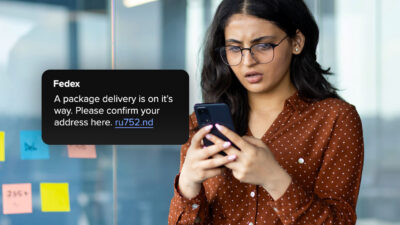


There’s nothing worse than arriving at your destination only to have your phone flooded with spam calls, scam texts, and suspicious voicemails.
Whether you’re traveling across the country or overseas, scammers know vacations create the perfect opportunity to catch people off guard. You’re distracted, using unfamiliar Wi-Fi networks, receiving travel notifications, and more likely to answer calls from unknown numbers.
The good news is that a few simple precautions can help keep your phone and personal information secure while you travel.
Download YouMail and enjoy smarter protection against spam calls, scam texts, and unwanted voicemail while you’re on the go.
Why travelers become prime targets
Travel changes your routine. You may receive calls from hotels, airlines, rideshare drivers, restaurants, or international phone numbers you’ve never seen before. That uncertainty makes it easier for scammers to disguise themselves as legitimate businesses.
At the same time, many people are focused on catching flights, checking into hotels, or navigating unfamiliar places, making it easier to overlook warning signs.
Scammers often take advantage of this by impersonating trusted organizations and creating a false sense of urgency.
Roaming scams
Unexpected charges create the perfect distraction
International travel often comes with questions about roaming charges, carrier notifications, and mobile service. Scammers know this.
Common roaming scams include text messages or phone calls claiming:
- Your roaming service has been suspended
- Additional fees must be paid immediately
- Your mobile account needs verification
- Your travel plan has expired
The message usually includes a link or asks you to provide payment information.
In reality, legitimate mobile carriers rarely request sensitive information through unsolicited texts or calls.
Verify directly with your carrier
If you receive an unexpected roaming alert, avoid clicking any links or calling the number provided.
Instead, open your carrier’s official app or contact customer support using the number listed on its website.
A few extra minutes can prevent identity theft or financial fraud.
International callback scams
One missed call can become expensive
Another common travel scam is the international callback scam, sometimes called the “one-ring” scam.
Here’s how it works:
- Your phone rings once.
- The caller hangs up immediately.
- Curiosity leads you to return the call.
The number often belongs to an expensive international premium-rate service, where every minute generates revenue for the scammers.
Many of these numbers appear legitimate because they resemble familiar country or area codes.
Resist the urge to call back
If you miss a call from an unfamiliar international number, verify it before returning the call.
A reverse phone lookup can often identify whether the number has been associated with spam or scam activity.
Reverse phone number lookup
Find out who’s calling you
If the call was truly important, the caller will usually leave a voicemail or attempt to contact you again.
Scam texts increase while traveling
Travel-related phishing texts have become increasingly common. Scammers frequently impersonate airlines, hotels, vacation rental companies, customs agencies, package delivery services, and credit card providers.
These messages often claim there’s a problem with your reservation, payment, or itinerary and urge you to act immediately.
Before clicking any link, log in directly through the company’s official website or app to verify whether any action is actually required.
Protect your privacy while you’re away
Travel often means connecting to public Wi-Fi, downloading travel apps, and sharing your location more frequently than usual.
These habits can increase your exposure if you’re not careful. A few smart privacy practices include:
- Avoid posting your location in real time on social media.
- Use strong, unique passwords for travel accounts.
- Enable multi-factor authentication whenever possible.
- Keep your phone and apps updated.
- Avoid entering sensitive information over unsecured public Wi-Fi.
The less information scammers can gather about you during your trip, the harder it becomes for them to launch convincing attacks.
Download YouMail and instantly stop spam calls, texts, and voicemail.
Use smarter spam protection while traveling
Built-in spam protection helps, but today’s scam campaigns move quickly.
Scammers constantly rotate phone numbers, spoof legitimate businesses, and launch coordinated campaigns that can bypass simple number blocking.
Apps like YouMail use intelligent spam detection to identify scam patterns, helping block suspicious calls before your phone rings.
That means fewer interruptions whether you’re relaxing on the beach, attending a conference, or exploring a new city.
Bonus tip: Check your online exposure before you leave
Many travelers don’t realize their phone number, email address, or home address may already be publicly available through data broker websites. That information can make it easier for scammers to target you while you’re away.
Running a Privacy Scan before your trip helps you understand where your personal information is exposed and provides guidance on reducing that exposure.
Taking a few minutes before you travel can lead to fewer unwanted calls and greater peace of mind during your vacation.
Your number is for sale online
See where your phone number, address, or other info is exposed – in seconds.
Travel smarter and stay protected
Vacations should be about making memories, not dealing with scam calls or fraudulent text messages.
Whether you’re traveling domestically or internationally, staying alert to roaming scams, international callback scams, and phishing texts can help protect both your phone and your personal information.
Before your next trip:
- Verify unexpected calls independently.
- Ignore suspicious texts and unknown links.
- Avoid returning calls to unfamiliar international numbers.
- Use stronger spam protection.
- Check where your personal information is exposed online.
With YouMail protecting your calls and Privacy Scan helping you reduce your online exposure, you can spend less time worrying about scammers and more time enjoying your trip.