

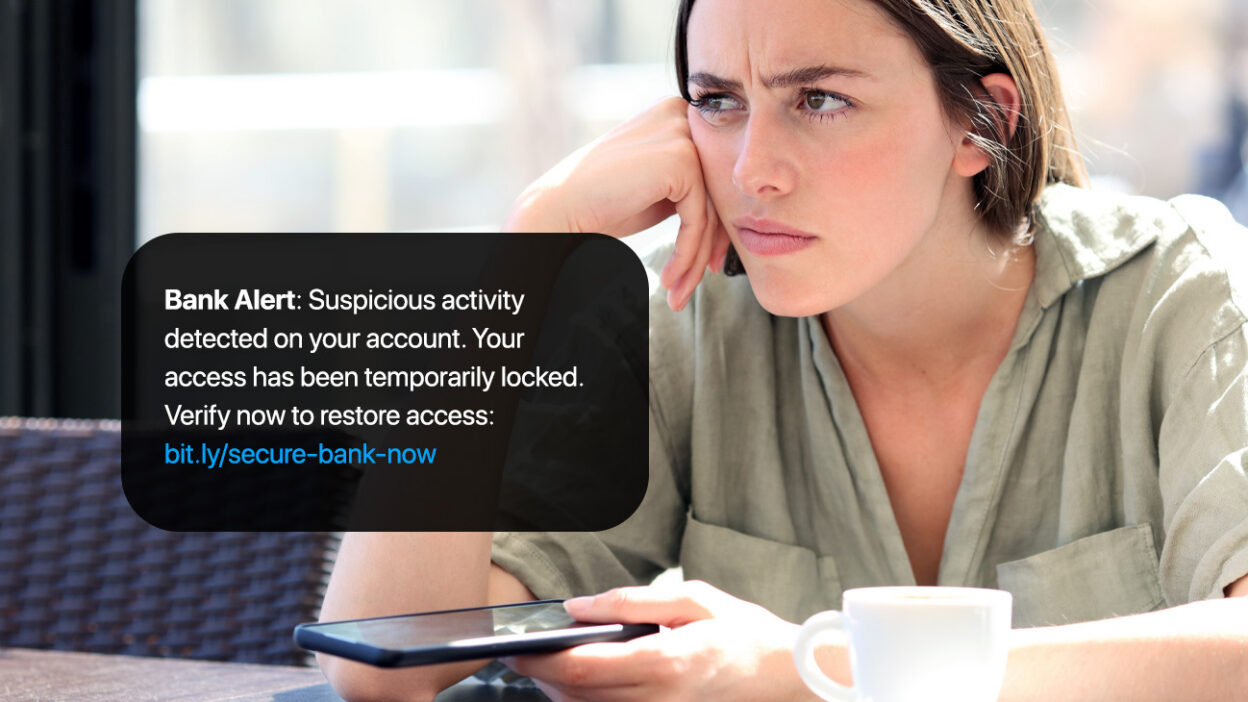
Scam texts are no longer occasional annoyances. For many people, they are a daily occurrence. Messages about missed deliveries, suspicious account activity, or urgent payment requests are showing up more frequently and looking more convincing than ever.
The increase is not random. It is the result of more advanced tactics, better data, and smarter technology working behind the scenes. Platforms like YouMail are tracking these patterns closely, and the trends point to one clear reality. Scam texting is evolving quickly, and consumers need to adapt just as fast.
Download YouMail and instantly stop spam calls, texts, and voicemail.
What is driving the increase in scam texts
More data is available than ever
Scammers are working with larger and more detailed data sets than they were even a few years ago. Phone numbers, email addresses, and behavioral data are widely available through data brokers and past breaches.
This allows messages to feel more personalized. Instead of generic spam, you may see texts that reference services you actually use or situations that feel relevant to your day to day life.
That added layer of realism is what makes modern scam texts more effective.
Texting has become a primary channel
Consumers are more likely to read and respond to text messages than emails or unknown phone calls. Scammers understand this and have shifted their focus accordingly.
Texts feel immediate and personal. That combination creates a higher likelihood of engagement, especially when paired with urgency.
The tactics behind modern scam texts
Spoofing makes messages look legitimate
Spoofing allows scammers to disguise the origin of a message so it appears to come from a trusted source. A text might look like it is coming from your bank, a delivery company, or even a local number.
This removes the natural skepticism people might have with unknown senders. If the message looks familiar, it is more likely to be trusted.
In many cases, the number itself is not real or is being used without the actual owner’s knowledge.
More on how Caller ID Spoofing Is Back And Smarter Than Ever .
Number rotation keeps scammers moving
Scam campaigns rarely rely on a single number. Instead, they rotate through thousands of numbers to avoid detection and blocking.
You may block one number today, only to receive the same message tomorrow from a completely different number. The script stays the same, but the delivery method changes.
This makes traditional blocking methods less effective unless they are backed by pattern recognition and network-level intelligence.
AI is making scams more convincing
One of the biggest shifts in 2026 is the use of AI to generate scam messages.
These messages are:
- Better written and more natural sounding
- Free of the spelling and grammar mistakes that once made scams easy to spot
- Adaptable based on trends and user behavior
AI allows scammers to quickly test and refine messaging, making each campaign more effective than the last.
Instead of sending one generic message to millions of people, they can now create variations that feel tailored and timely.
Find out How AI is changing the spam call game and why smarter protection matters more than ever
Common types of scam texts you are seeing
While the tactics are evolving, the themes behind scam texts remain consistent. Understanding these patterns makes it easier to recognize them when they appear.
Delivery and package scams
These messages claim there is an issue with a delivery and ask you to click a link or provide information.
They work because so many people are expecting packages at any given time. The message feels plausible, even if you are not currently tracking an order.
Financial and account alerts
These texts warn of suspicious activity or account issues and urge immediate action.
They often include instructions to verify your identity, reset a password, or confirm a transaction. The urgency is designed to override caution.
Subscription and billing messages
Scammers frequently mimic subscription services, claiming there is a billing issue or renewal problem.
The goal is to get you to click a link or provide payment information under pressure.
Prize and incentive messages
Some texts promise rewards, refunds, or limited time offers. While less aggressive, they still aim to get engagement and capture personal data.
Learn more about The Evolution of Text Scams: How Scammers Have Adapted to the Digital Age
Why these texts are working
The effectiveness of scam texts comes down to a few key factors.
They create urgency, making it feel like immediate action is required. They appear familiar, often using recognizable names or formats. And they are delivered at scale, increasing the chances that someone will engage.
Even cautious users can be caught off guard when a message aligns with something they are expecting or concerned about.
How to stop scam texts before they become a problem
Do not engage with suspicious messages
If a text feels urgent, unexpected, or slightly off, the safest approach is to pause and verify.
Avoid clicking links or replying directly. Even a simple response can confirm that your number is active and lead to more targeting.
Verify through official channels
If a message claims to be from a bank, delivery service, or company, go directly to the official website or app to check.
Do not rely on links or contact information provided in the message itself.
Use tools that identify and block threats
Basic phone settings can help, but they are often not enough to keep up with modern scam tactics.
Solutions like YouMail go beyond simple blocking by identifying patterns across large networks of calls and messages. This allows for more effective detection, even when numbers are constantly changing.
Report suspicious activity
Reporting scam texts helps improve detection systems and protects others from the same threats.
The more data available about these campaigns, the easier it becomes to identify and stop them at scale.
The bigger picture
Scam texts are increasing because they work. The combination of better data, smarter technology, and evolving tactics has made them one of the most effective tools for scammers.
The good news is that awareness is just as powerful. When you understand how these messages are created and delivered, it becomes much easier to spot them before they cause harm.
Final thoughts
The rise in scam texts in 2026 is not a temporary spike. It is part of a broader shift in how scams are executed and delivered.
Staying protected requires a mix of awareness, caution, and the right tools to filter out threats before they reach you. If you want to take a more proactive approach to protecting your phone and personal information, explore what is available through YouMail and stay one step ahead of evolving scams.