
If it feels like your phone has been ringing more lately, the data confirms it. Robocall activity increased in March, reversing the slight dip we saw earlier in the year.
Each month, the YouMail Robocall Index tracks nationwide trends to show how spam and scam activity is evolving. You can explore tools and protection options at https://robocallindex.com/
March 2026 robocall volume snapshot
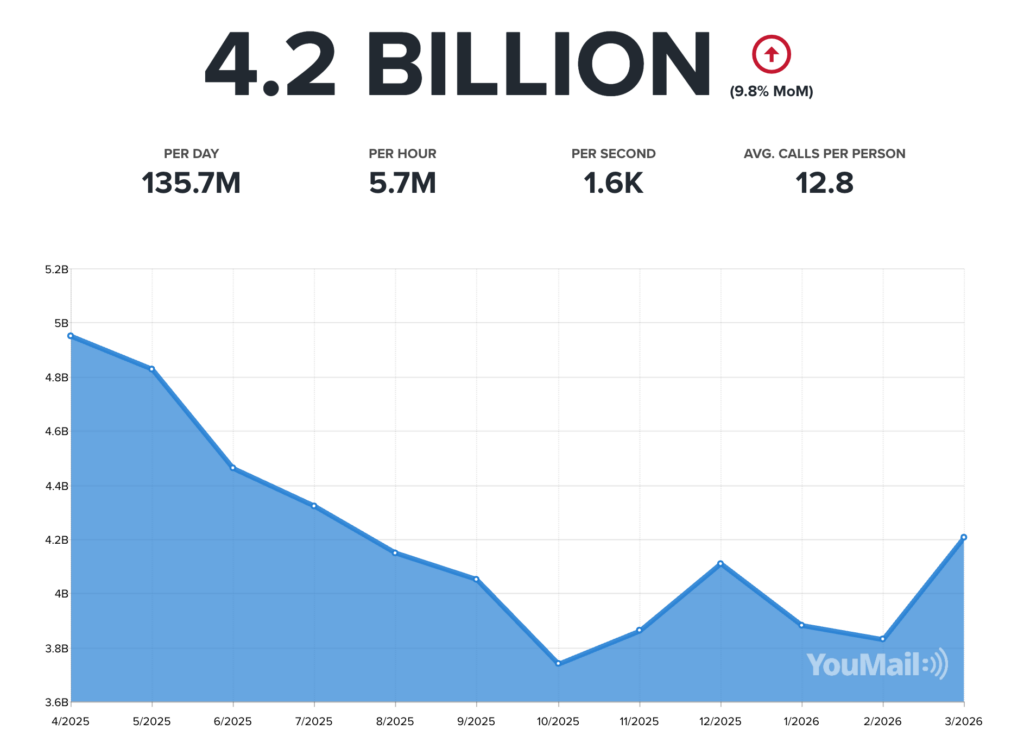
In March 2026, Americans received 4.2 billion robocalls, marking a 9.8 percent increase month over month.
That translates to:
- 135.7 million calls per day
- 5.7 million calls per hour
- 1,600 calls per second
- 12.8 calls per person for the month
After several months of relatively stable or declining volume, March represents a clear upward shift.
What changed from February to March
Volume rebounded
February saw robocall activity remain under 4 billion total calls. March pushed that number back above the threshold, signaling renewed campaign activity.
This type of increase is not unusual for early spring. It is often driven by:
- Financial and tax-related scams
- Increased outbound dialing after slower winter months
- New scam campaigns launching with updated scripts
Even a single digit percentage increase results in hundreds of millions of additional calls.
Daily impact remains high
At over 135 million calls per day, robocalls continue to be a constant presence.
Even if consumers do not answer most of them, the volume alone creates ongoing disruption and risk.
Scam vs telemarketing trends
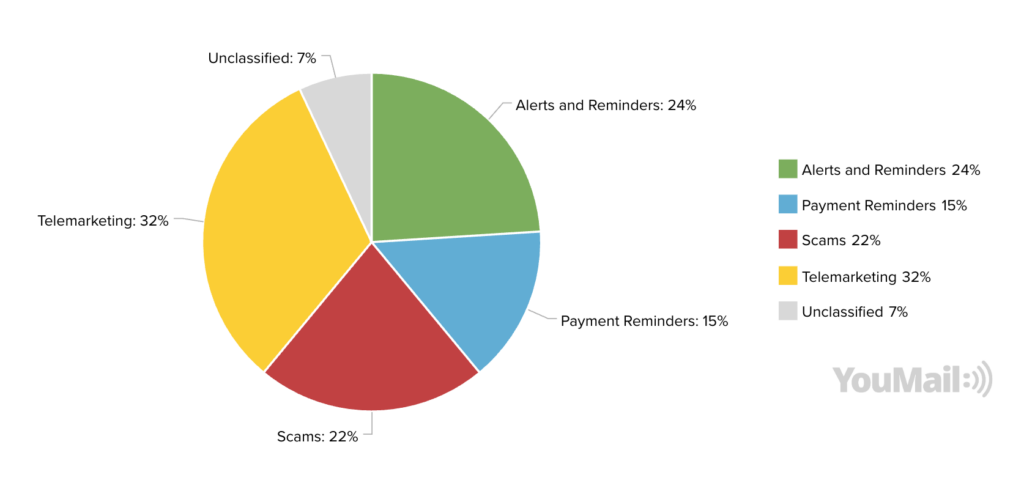
Unwanted calls still dominate
A majority of robocalls fall into two categories:
- Telemarketing calls
- Scam or fraudulent calls
While telemarketing may be legal in some cases, scam calls are designed to deceive and extract information or money.
March trends to watch
In March, several categories typically gain traction:
- Financial impersonation scams tied to tax season
- Government-related messaging designed to create urgency
- Payment and account verification scams
- Service alerts that mimic legitimate companies
These campaigns are designed to feel timely and relevant, increasing the likelihood that someone will engage.
Where we are seeing the biggest spikes
Impersonation scams
One of the most notable trends is the continued rise of impersonation scams.
Callers pose as:
- Banks or financial institutions
- Government agencies
- Delivery services or subscription platforms
These calls often use urgent language to push immediate action.
Rotating number campaigns
Spam operations are increasingly using number rotation to avoid detection.
Instead of calling from one number, they distribute calls across thousands of numbers. The script stays the same, but the caller ID changes.
This makes it harder for basic blocking tools to keep up.
Geographic impact: Where calls are concentrated
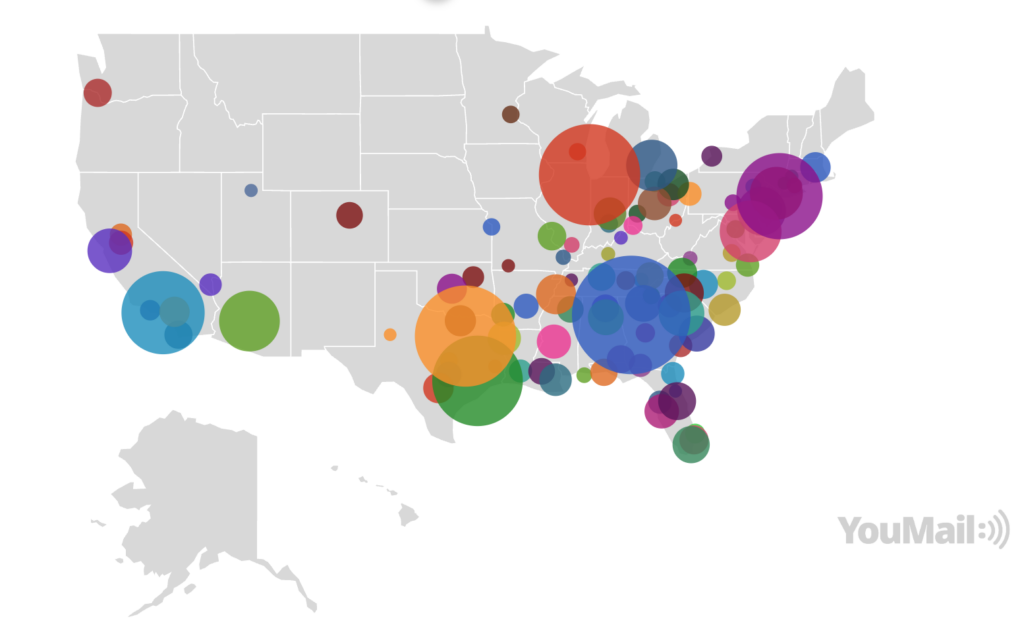
Robocalls are not evenly distributed across the country. In March, several major metro areas saw the highest volumes.
Top affected cities included:
- Atlanta with over 137 million calls
- Chicago with more than 117 million
- Dallas and Houston both exceeding 100 million
- New York and Los Angeles close behind
Many of these cities also saw month over month increases between 7 percent and 12 percent.
This indicates that robocall campaigns are targeting densely populated areas where they can reach more people quickly.
What this means for consumers
Even with fluctuations in monthly totals, the overall threat remains consistent.
Key takeaways:
- Robocall volume is still in the billions every month
- Scam tactics are becoming more targeted and convincing
- Caller ID alone is not enough to determine legitimacy
The increase in March reinforces that robocall activity is cyclical, not declining.
How to stay protected
The most effective approach combines awareness with tools that actively detect and block threats.
At https://www.youmail.com/, you can:
- Block spam calls before they reach your phone
- Identify unknown callers instantly
- Report suspicious numbers to improve protection for others
Download YouMail and instantly stop spam calls, texts, and voicemail.
Final thoughts
March 2026 marks a clear rebound in robocall activity, with 4.2 billion calls placed nationwide.
While the increase is notable, the bigger story is how these calls are evolving. Scammers are refining their tactics, rotating numbers, and creating more convincing messages.
Staying ahead of these changes requires both awareness and the right tools.
To explore protection options and stay informed, visit https://www.youmail.com/.