
Robocall trends do not move in a straight line. After several months of relative stability, March 2026 showed a clear shift in volume, raising new questions about where the market is heading next and what April activity is likely to reveal.
Using data from the YouMail Robocall Index, we can break down what changed most recently, what categories are driving activity, and what to watch moving forward. Tools like YouMail continue to track these patterns in real time, helping consumers understand not just how many calls are happening, but why.
March 2026 snapshot: a return to higher volume
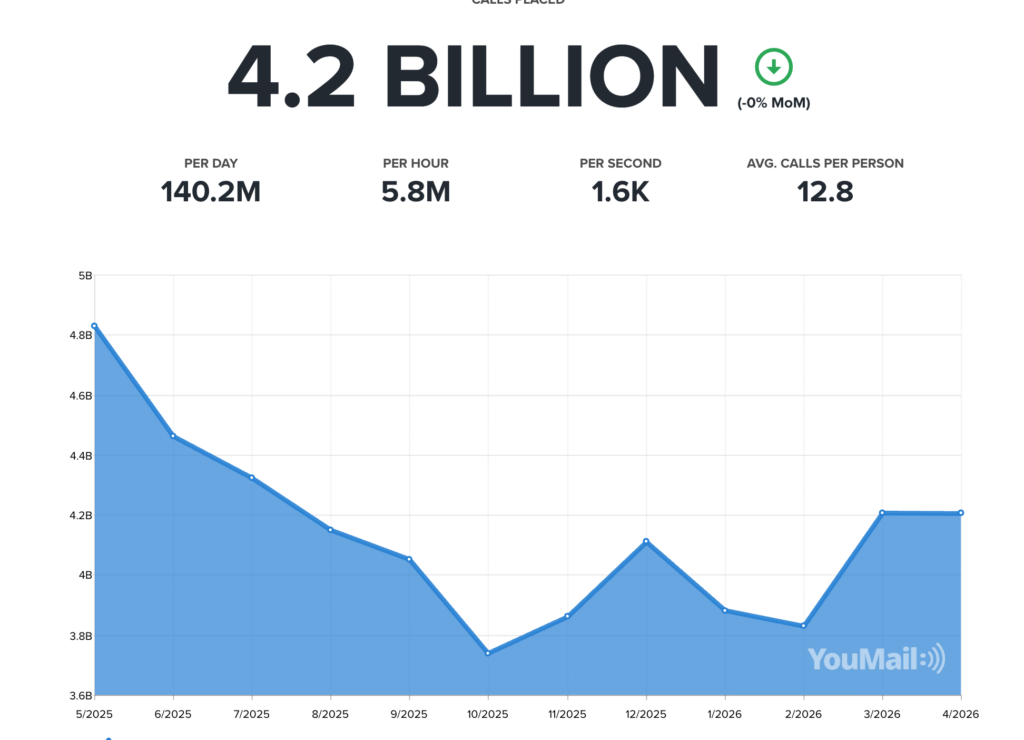
March marked a noticeable increase in robocall activity after several months below 4 billion calls.
- 4.2 billion total robocalls placed
- 9.8 percent increase month over month
- 135.7 million calls per day
- 1,600 calls per second
This was the highest monthly volume since mid-2025 and a reversal from February’s lower baseline of just over 3.8 billion calls.
However, the increase is not as dramatic as it first appears. March has more days than February, which contributed to the overall rise. On a per-day basis, call intensity remained relatively flat, indicating that underlying activity levels did not spike dramatically.
What changed from February to March
Volume increased, but behavior stayed consistent
At a high level, total call volume increased by nearly 10 percent. But when broken down further, the story becomes more nuanced.
- February: just over 3.8 billion calls
- March: 4.2 billion calls
- Daily averages remained nearly unchanged
This suggests that robocallers did not necessarily expand their activity aggressively. Instead, the increase reflects timing, calendar differences, and the continuation of existing campaigns.
The real shift: momentum is returning
The more important takeaway is trend direction.
After six consecutive months of staying below 4 billion calls, March broke that pattern.
That shift signals:
- Campaigns are ramping back up
- Seasonal cycles are resetting
- Scammers are re-engaging at scale
This creates a stronger baseline heading into April and beyond.
Robocalls by category: what types of calls are driving volume
Looking at category distribution provides deeper insight into what is actually reaching consumers.

In March 2026:
- Telemarketing calls: 32 percent
- Alerts and reminders: 24 percent
- Scam calls: 22 percent
- Payment reminders: 15 percent
- Unclassified: 7 percent
While telemarketing remains the largest category, scam calls make up a significant and high-risk portion of total activity.
Why scam calls matter most
Even though scams account for roughly one in five calls, they represent the highest level of risk.
These calls are designed to:
- Extract personal or financial information
- Create urgency and pressure
- Mimic legitimate organizations
As volume increases, so does exposure to these higher-risk interactions.
Emerging scam categories to watch
Financial and impersonation scams
One of the most consistent trends is the rise of impersonation-based scams. These calls often pose as:
- Banks or financial institutions
- Government agencies
- Delivery or service providers
They rely heavily on urgency and familiarity to drive engagement.
Payment and account verification scams
Closely related to impersonation, these calls focus on account access and payment issues.
Common tactics include:
- Claims of suspicious activity
- Requests to confirm transactions
- Instructions to provide login or verification details
These campaigns are highly effective because they mirror legitimate communications.
Rotating number campaigns
Scam campaigns are increasingly built around number rotation. Instead of using one number, they cycle through thousands.
This allows them to:
- Avoid detection and blocking
- Maintain consistent outreach
- Reuse scripts across multiple regions
It also makes traditional call blocking less effective without pattern-based detection.
Geographic concentration: where calls are increasing
Robocalls are not evenly distributed. In March, several major cities saw the highest volumes and notable increases.
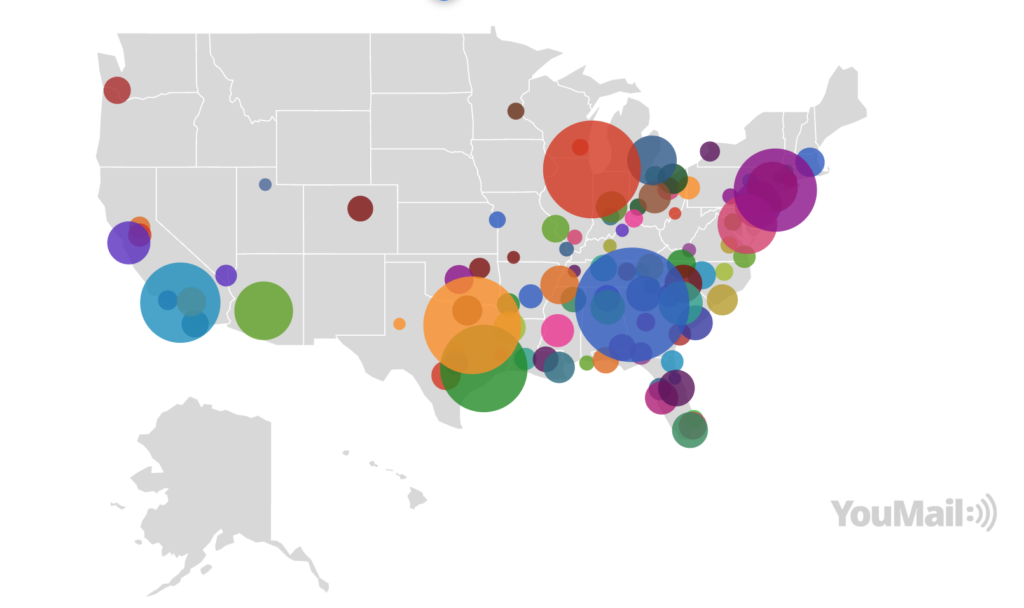
Top cities included:
- Atlanta with over 137 million calls
- Chicago and Dallas each with over 117 million
- Houston exceeding 100 million
- New York and Los Angeles close behind
Many of these cities experienced month over month increases ranging from 7 to 12 percent.
This reinforces a consistent pattern: robocall campaigns target densely populated metro areas where scale and efficiency are highest.
What to expect in April
While full April data is not yet available, recent trends point to a few likely outcomes.
Continued elevated volume
With March breaking the sub-4 billion trend, April is likely to remain elevated or fluctuate slightly around that level.
Stable but persistent scam activity
Scam call percentages are expected to remain consistent, even if total volume shifts.
Ongoing campaign refinement
Scammers continue to improve their tactics, including:
- Better scripts
- More targeted messaging
- Increased use of automation and AI
This results in not just more calls, but more convincing ones.
What this means for consumers
The key takeaway is not just that robocalls increased. It is that they are stabilizing at a high baseline while becoming more sophisticated.
Even when volume dips, the risk does not disappear.
Consumers should expect:
- Consistent exposure to spam calls
- More realistic and targeted messaging
- Continued use of local and spoofed numbers
Understanding these patterns is critical to avoiding engagement.
How to protect yourself as trends evolve
Do not trust caller ID alone
Spoofing makes it easy for scammers to appear legitimate. Always verify before responding.
Avoid engaging with unknown callers
Let unknown calls go to voicemail and review them carefully before taking action.
Block and report suspicious numbers
Reporting helps improve detection across networks and reduces overall impact.
Use tools that identify patterns, not just numbers
Because robocall campaigns rely on scale and rotation, effective protection requires pattern recognition.
Reverse phone number lookup
Find out who’s calling you
Final thoughts
March 2026 marked a turning point in robocall activity, with volume rising back above 4 billion calls and signaling renewed momentum.
While April data will provide more clarity, the broader trend is already clear. Robocalls are not going away, and scam tactics are continuing to evolve.
Staying protected means understanding not just how many calls are happening, but how they are changing.
To explore robocall trends and take control of your phone, visit YouMail and stay ahead of what is coming next.